|
|
norrshaman norrshaman is a publishing
house that creates, supplies and publishes thoughts and texts that give
insights into the world and into Dreamtime, what in the old Nordic tradition
was called the unseen. norrshaman was created in 2004 and is
run by JÖRGEN I ERIKSSON, who is a
journalist and an author and, who has been studying shamanism, traditional
healing and spirituality since the late 1970’s – theoretically and
experimentally, and through journeys and field studies among the Saami in the
northernmost parts of Sweden and Norway and in Navajo Nation, Diné Bikéyah, in Southwestern
USA. Since the late 80’s he has been giving courses on shamanism and rune
magic – mostly in Sweden but also in Estonia and UK. For the foreseeable
future he has decided not to go online with courses and lectures. The real
teachers are Mother Earth and The Great Mystery and rune magic can be learned
on your own at sacred sites. How? Please read the text Instead of online courses: Learning Rune
Magic on your own. Jörgen has written
several books on the Nordic shamanic tradition and rune magic, and several of
them are available in English; Shamanistic Manifesto – Activism in
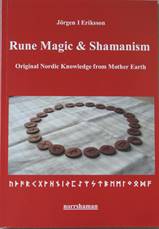
Defence of the Earth (order free pdf here), Rune Magic and Shamanism –
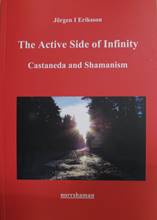
Original Nordic Knowledge from Mother Earth, The Active Side of Infinity –
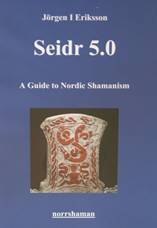
Castaneda and shamanism. Seidr 5.0 – A Guide to Nordic Shamanism
is available as a free pdf here.
The
Active Side of Infinity: Castaneda and Shamanism (ISBN 978-91-639-9077-9) is a textual
analysis of Castaneda’s twelve books on his apprenticeship with the Mexican
sorcerer don Juan Matus. Castaneda’s works
represent deep shamanism from which
present-day students of shamanism has much to learn. But it is necessary to
keep Castaneda at arm’s length. Based on my own experiences of 40 years of shamanic
work in the Nordic tradition I try to de-mystify Castaneda and extract the
very best of Castaneda – in this way liberating Castaneda from Castaneda. My
hope is that my book might work as a manual and a guide to some of the
gateways into Dreamtime, thereby contributing to the efforts to create a
shamanism for the 21st century. This book can be ordered by e-mail
at the cost of US $30, £20 or 25 Euros (postage included). When
ordering please include your mailing address. When confirming the order I
will bill you via PayPal (or the banking SWIFT-system). The book is also
available at Amazon and the Swedish web shop Adlibris.
More information on the book can be found here.
Rune Magic and Shamanism (ISBN
978-91-978832-2-1) deals with the great inherent power of the runes. They are
doorways to Dreamtime and do express the totality of all knowledge that is
dispersed everywhere. The runes are one of the sacred rites originating from
the holy beings of Dreamtime and they can be utilized to bring harmony and
balance to humans, animals, plants and minerals. The runes are a sacrament in
Nordic shamanism and by combining the runes with other shamanic methods such
as vision quests, ceremonies, seidr and magical singing this
shamanic tradition can manifest its full potential. This book describes the
runes as processes, their origins and meanings and how they can be used as an
excellent tool in order to think and act in beauty. Its aim is to be a manual
to the shaman’s philosophy and practice. This book can be ordered by e-mail
at the cost of US $30, £20 or 25 Euros (postage included). When
ordering please include your mailing address. When confirming the order I
will bill you via PayPal (or the banking SWIFT-system). The book is also
available at Amazon and the Swedish web shop Adlibris.
More information on the book can be found here.
Seidr 5.0 (ISBN 978-91-978832-8-3) is a theoretical and a practical guide to the
distinctive features of Nordic shamanism with extensive accounts of sacred
sites, non-ordinary reality, Dreamtime, vision quests, soul journeys, power,
magic, runes, seidr, ceremonies and shamanic
medicine. The author also writes thoroughly on traditional philosophy, the
many similarities between a shamanic world view and
quantum physics and how Nordic shamanism can be creatively practiced in the
21st century. This book is sold out, no new printing is planned,
but it is available as a free pdf here. An earlier booklet with the
title Sometimes Miracles Happen... On Saami shamanism and Traditional
Healing was published by Folktankar in 2004. In this booklet Jörgen
I Eriksson systematically analyzes the methods,
concepts and functions of traditional healing and shamanism, especially among
the Saami. Several healers and shamans tell, with their own words, what
healing is all about, where they get their power from and how they use it to
fulfil their tasks. From the
activities and thoughts of the healers he draws conclusions on how other human
beings can extract wisdom from this tradition of knowledge. This booklet is sold out but it is now
available for free as a pdf. The article Saami Shamanism: The Noajdie
Today was published in the Newsletter of The Foundation for Shamanic
Studies, Vol. 1, No. 3 (Winter 1988-89) and can possibly be ordered from
them. This text was one of the chapters in the first edition of Jörgen I Eriksson’s book on Saami Shamanism
in Swedish. Read also about Saami
Ethno Medicine. There are as well a few
other articles in English on this site that might be of interest: Heimdall, Odin and the Nine
Waves of Creation. Michael Harner writes his
testament. The World Tree, the Cosmic Web and Mother Earth in
Nordic Tradition. The Runes – A Shamanic Tool from Dreamtime. |